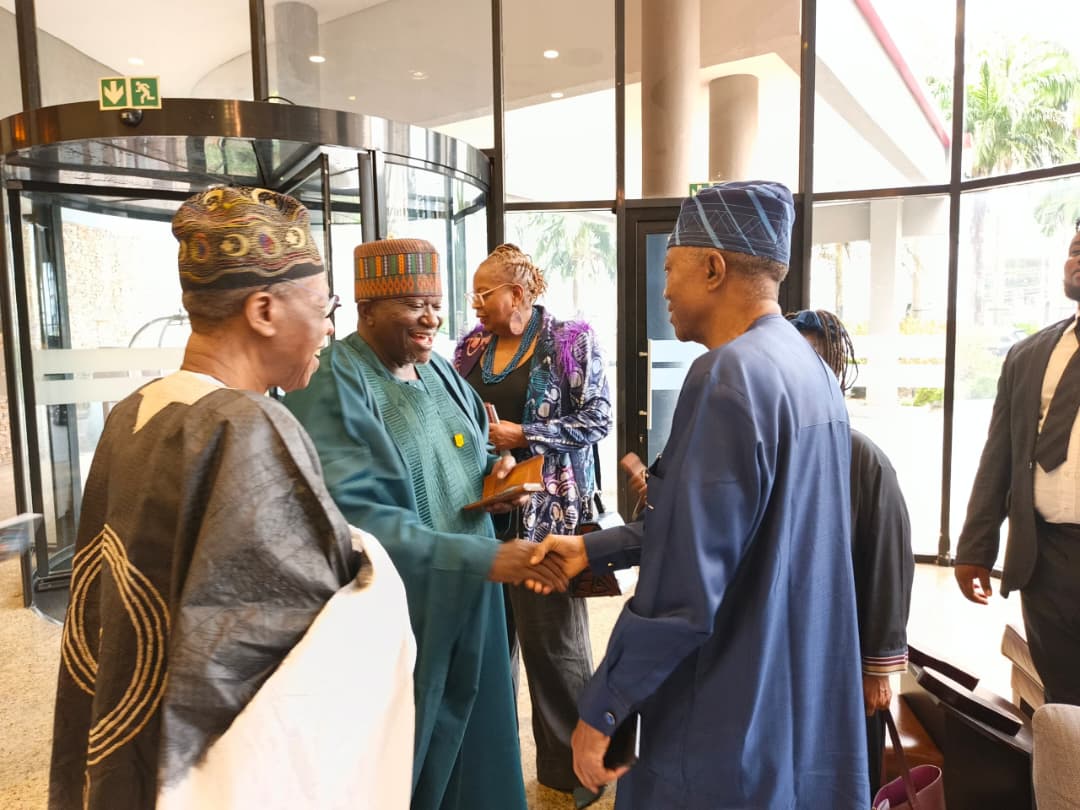
The Symposium and Easter Parade Festival (SEFP), themed “Unlocking Access to Finance for the Creative Economy,”was held on April 2, 2026, at the Mövenpick Hotel, Alfred Rewane Road, Ikoyi.
The Convener/CEO of NMO Limited and Vice Chairman of NACCIMA Creative Economy, Dr. Ngozi Omambala, in her opening address, warmly welcomed distinguished dignitaries, including the National President of NACCIMA, Engr. (Dr.) Jani Ibrahim, mni, OON; the keynote speaker, Alhaji Lai Mohammed, former Minister of Information and Culture; representatives of financial institutions; enterprise leaders; and other esteemed guests. She expressed her appreciation for their presence and active participation, emphasizing the importance of addressing critical challenges within Nigeria’s creative sector. She assured attendees that the event would foster meaningful, solution-driven discussions.
The Symposium and Easter Parade Festival 2026 was presented as a strategic platform to explore both the opportunities and challenges within Nigeria’s creative economy. Dr. Omambala highlighted the sector’s vast talent pool while identifying the lack of structured capital alignment as a major constraint to unlocking its full potential.
Overview of Nigeria’s Creative Economy
Dr. Omambala noted that despite limited access to structured financing, Nigeria’s creative sector has continued to grow, driven by resilience, innovation, and strong market demand. She emphasized that the sector contributes significantly to the national GDP estimated at between ₦5–₦6 billion annually and supports over four million jobs across diverse creative fields.
She further described the creative industry as one of Nigeria’s largest non-oil employment generators, underscoring its critical role in economic diversification.
Challenges and Opportunities in the Creative Economy
The Convener stressed that access to formal finance remains structurally limited despite the sector’s evident viability and growth trajectory. She described the industry as being at a critical inflection point, where expansion without adequate structure could threaten long-term sustainability.
She emphasized the need to strengthen the sector through disciplined and scalable capital deployment, supported by enabling policy frameworks. According to her, there is an urgent need to move beyond isolated success stories toward a more structured and sustainable growth model. She also highlighted the importance of transforming informal creative excellence into bankable and investable ventures.
Objectives of the Symposium
Dr. Omambala explained that the symposium seeks to address structural barriers limiting access to formal finance for creative sector. She noted that a significant proportion of stakeholders in the sector still operate outside formal financial systems due to inadequate structural integration.
The event was therefore positioned as a convergence platform designed to foster dialogue, collaboration, and practical solutions. She reiterated the importance of disciplined capital engagement and affirmed the symposium’s role in generating actionable strategies to address the challenges facing Nigeria’s creative industry.
In his remarks, the National President of NACCIMA, Engr. (Dr.) Jani Ibrahim, mni, OON, reaffirmed the Association’s commitment as the umbrella body of the organized private sector to advancing enterprise development, supporting youth- and women-led businesses, and promoting a vibrant sectoral ecosystem. He noted that this commitment is being driven through strategic advocacy, stakeholder engagement, partnerships, and the creation of enabling economic opportunities.
He emphasized the need for the creative economy to receive the structure, visibility, and investment it deserves, while fostering stronger linkages between creative, financial institutions, and market access platforms.
According to him, the future of Nigeria’s economy will not be built on oil alone, but on ideas, innovation, and identity. He described the creative economy as a key driver of diversification, resilience, and global competitiveness. He stressed that unlocking its full potential requires the courage to invest differently, collaborate intentionally, and pursue long-term, sustainable strategies that move creativity beyond celebration to commercial viability.
He expressed appreciation to all participants and commended the vision and dedication of NMO Limited for sustaining a platform that continues to inspire dialogue, innovation, and strategic action.
The NACCIMA President further emphasized that creativity represents both a shared responsibility and a pathway to shared prosperity. He called on the government and relevant agencies to prioritize financing for the creative sector, develop enabling infrastructure, and implement sustainable frameworks that will position Nigeria not only as a cultural powerhouse but also as a globally competitive creative economy capable of delivering inclusive growth and long-term economic value.
Conclusion
Overall, the event provided a valuable platform for identifying key challenges facing the creative industry, including piracy, limited access to finance, trust deficits, and financial risk. It also highlighted the immense potential of youth, the importance of cooperative structures, and the need to leverage emerging technologies such as artificial intelligence to drive growth and sustainability within the sector.

