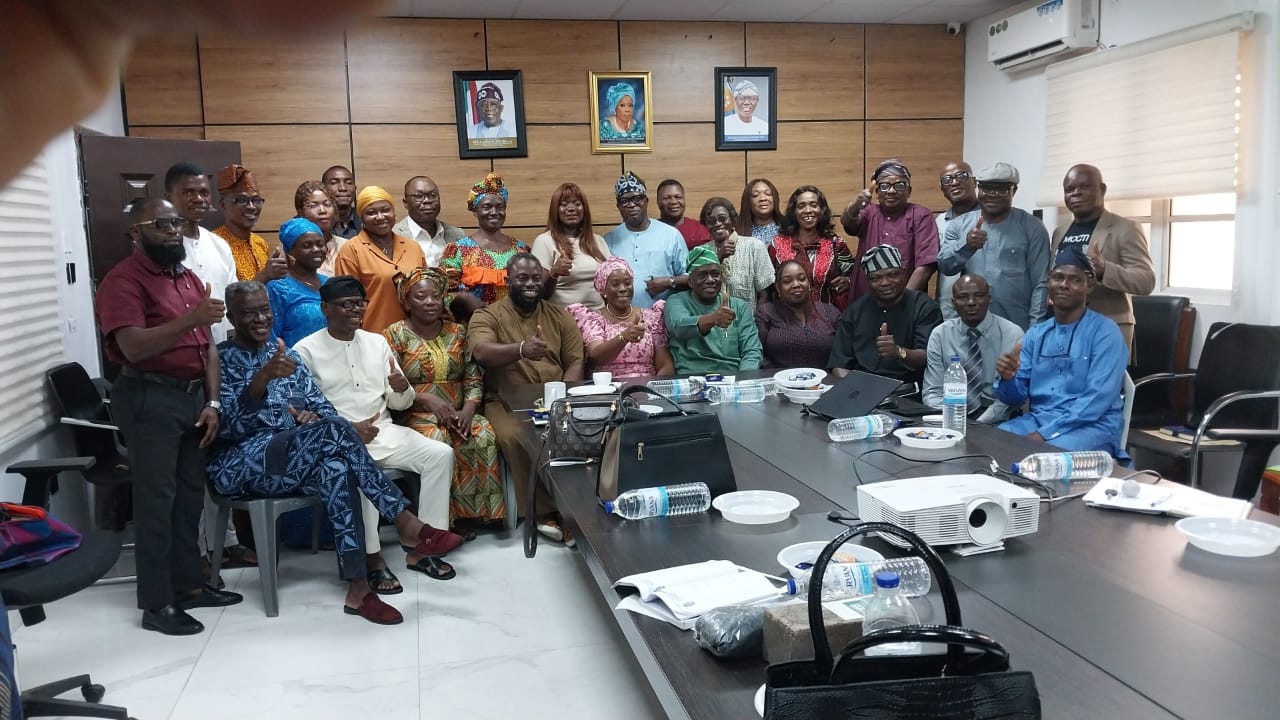
In a bid to drive industrial growth, the Lagos State Government convened a stakeholders’ meeting chaired by the Hon. Commissioner for Commerce, Cooperatives, Trade & Investment, Hon. Folashade Kaosarat Bada Ambrose.
In her Opening Remarks, the Honourable Commissioner of Commerce, Co-operatives, Trade & Investment (MCCTI) Hon. Folashade Kaosarat Bada Ambrose stated that the Lagos State Industrial Policy (LSIP) is primarily aimed at strengthening both the public and private sectors, particularly Business Membership Organizations (BMOs), as key drivers of industrial development. She noted that the Lagos State Government will actively support industrial innovation through strategic infrastructure development, the growth of MSMEs and cooperatives, and the promotion of sustainable and green innovation.
The policy is also designed to improve the ease of doing business across the state. She further emphasized that private financial institutions are expected to play a critical role in ensuring the success of the policy by providing the necessary funding and support to businesses. The Commissioner highlighted that the initiative is focused on creating jobs, empowering women, and driving economic growth. She reaffirmed that while the government will create an enabling environment for both sectors, the private sector is equally expected to play an active role. She concluded by stressing that the success of the policy depends on strong collaboration, with both sectors working hand in hand.
OVERVIEW OF LSIP
The Director, Trade & Investment / Policy Team presented an overview of the Lagos State Industrial Policy (LSIP), highlighting its objectives, framework, and implementation strategies.
Key focus areas include:
1. Promotion of local production and attraction of investments
2. Support for MSMEs and cooperative development
3. Infrastructure development
4. Ease of doing business reforms
5. Export growth and productivity enhancement
ROLES AND RESPONSIBILITIES OF BMOS
Business Membership Organizations (BMOs) were recognized as critical stakeholders in the successful implementation of the policy. Their roles include:
• Advocacy and awareness creation
• Engagement with members and stakeholders
• Collaboration with government agencies
• Providing feedback to improve policy implementation
INDUSTRIAL INNOVATION AND STRATEGIC FOCUS
The meeting emphasized the government’s commitment to:
• Strategic infrastructure development
• Growth of MSMEs and cooperatives
• Promotion of sustainable and green innovation
The policy is expected to drive job creation, women empowerment, and inclusive economic growth across Lagos State.
ROLE OF PRIVATE SECTOR AND FINANCIAL INSTITUTIONS
Stakeholders highlighted the importance of private sector participation and the role of financial institutions in providing funding and support.
It was agreed that:
• The private sector must actively participate in implementation
• Financial institutions are key to funding business growth
• Strong collaboration between public and private sectors is essential
Questions & Answers
Stakeholders were provided the opportunity to ask questions, and give feedback on the Lagos State Industrial Policy (LSIP).
During the session, Mrs. Ransom Koti inquired whether a working committee would be established to ensure effective implementation of the policy and to incorporate stakeholders’ feedback. In response, the Honourable Commissioner, Folashade Kaosarat Bada Ambrose confirmed that a committee would be established.
Response:
She explained that the committee, known as the Industrial Implementation Task Force, will work in collaboration with BMOs to ensure the objectives of the policy are achieved. This includes strengthening the Ministry of Commerce through targeted training and, where necessary, establishing or empowering agencies to address implementation challenges.
The Commissioner further stated that monthly stakeholder meetings may be held after the official launch scheduled for 30th April 2026, to allow stakeholders to highlight challenges and track progress.
The National Vice President of NASI, George, emphasized that BMOs should focus on key questions such as what to produce, how to support production, and how to ensure that products can compete internationally.
Key focus areas of the implementation task force include:
• Capacity building
• Industrial cluster development
• Youth development and technical training
• Women employment and empowerment
The Commissioner also highlighted the need to address challenges faced by MSMEs and noted that relevant agencies would be engaged. She reiterated that the Ministry of Commerce is committed to promoting shared prosperity and assured participants that all feedback would be considered.
In another development, a representative from the Lagos Chamber of Commerce and Industry (LCCI) raised concerns about power supply and suggested alternatives such as solar energy and waste-to-energy solutions. In response, the Commissioner stated that the Honourable Minister of Energy would be invited to the policy launch to provide further clarification.
On the concerns raised on inclusivity for persons with physical disabilities, the Commissioner directed the Ministry of Commerce to engage relevant stakeholders to ensure inclusive communication and participation.
KEY DECISIONS / RESOLUTIONS
1. Establishment of the Industrial Implementation Task Force
2. Commitment to continuous stakeholder engagement by the government
3. Active involvement of BMOs and private sector stakeholders to sensitize members on LSIP
4. Emphasis on inclusive growth, job creation, and women empowerment
5. Private sector to actively participate in implementation
6. Financial institutions to provide funding and support
7. Ministry of Commerce to incorporate stakeholder feedback
8. Engagement with energy stakeholders on power solutions
9. Engagement with the relevant stakeholders to involve persons with physical disabilities.
The Director, Trade Department delivered the closing remarks, appreciating all participants for their contributions and encouraging continued collaboration.

